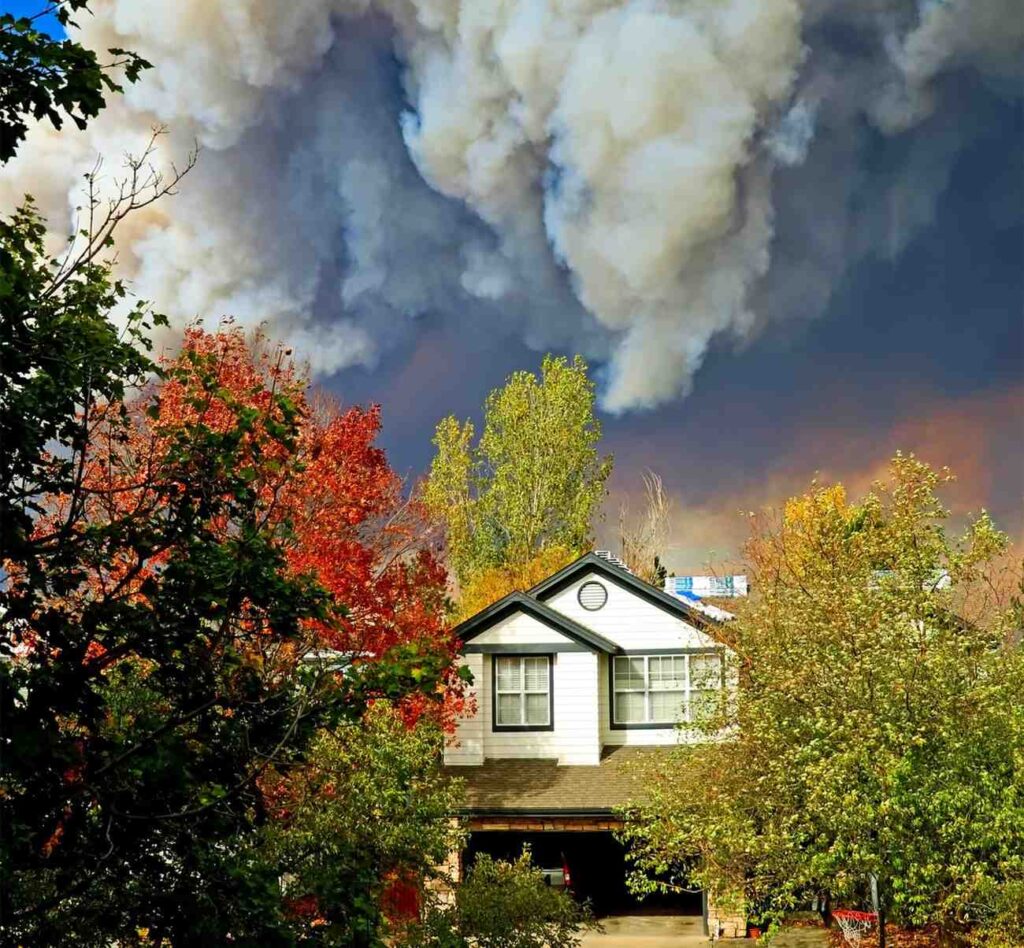
About 3 million Coloradans – almost half of the state’s population – live in the WUI (wildland urban interface), where the proximity to fire-prone wildlands puts homeowners and businesses at constant risk. As Colorado wildfires become larger and more unpredictable, wildfire prevention and preparedness are now a necessary part of living in Colorado.
In this article, post-fire testing and remediation expert Jeanine Humphrey, owner of M.A.R.S Environmental, shares why wildfires have become such a problem in Colorado and what homeowners can do to protect their home and family from the dangers of wildfires.
What Makes Colorado So Susceptible to Wildfires?
Colorado’s dry climate and dense mountain forests make it particularly susceptible to wildfires. And while fires are a natural (and necessary) part of the state’s forest ecosystems, climate change and resulting droughts have tipped the scale from “beneficial” to “devastating.” From the 1990s to the 2020s, Colorado has seen about a sixfold increase in the number of fires per year.
To make matters worse, as the number of fires increases, so too does the population in wildfire-prone areas. This growth means more human-caused ignitions and more communities at risk.
Wildfire risk continues to grow, both in extent and duration. Climate change has extended the wildfire season, erasing any semblance of an “off season.” In fact, the Marshall Fire, which burned more homes than any fire in Colorado history, happened in the middle of winter. As fires continue to be larger and more frequent, Colorado homeowners must be prepared year-round.
The Dangers of Wildfires to Pets and Kids in Colorado
Wildfires are dangerous to anyone in their path, and they produce smoke that is unhealthy to breathe. When they reach the WUI, the dangers become even more pronounced.
Human structures in the WUI:
- Provide massive amounts of fuel and ignition sources for the fire to spread rapidly
- Produce soot with toxic substances when burned, including lithium, cyanide, heavy metals, PAHs (polycyclic aromatic hydrocarbons), and VOCs (volatile organic compounds)
After the Marshall fire, before proper testing and remediation could take place, a winter storm moved in, covering everything in snow. The moisture and freezing temperatures altered the post-fire toxins to produce a bleach-like substance, complicating testing and introducing new hazardous compounds.
The long-term health risks associated with post-fire chemicals and compounds is especially pronounced for kids and pets, who:
- Have vulnerable immune systems
- Breathe faster than the average adult (and thus can breathe in higher levels of toxins)
- Are more likely to put contaminated items in their mouths
- Spend the most time on the carpet, where toxins accumulate
Health risks of post-fire toxins include:
- Respiratory problems
- Cardiovascular issues
- Neurological symptoms
- Eye, throat, nose, and skin irritation
- Cancer
- Organ failure
The good news is that, while you can’t prevent wildfires or predict how they’ll spread, there are some relatively simple measures you can take to protect your home and family from the devastating wildfire aftermath.
How to Protect Your Colorado Home and Family from Wildfire Aftermath
Follow these six preparedness and safety tips to protect your home and your family’s safety during Colorado’s wildfire season.
1. Address your home’s structural ignitability.
Decrease the likelihood of your home igniting during a wildfire by using fire-resistant building materials, including:
- Class-A roof
- Metal flashing at roof-to-wall intersections
- Ember-resistant vents
- Non-combustible siding, window/door frames, and patio materials
Pro Tip: Install water systems or other fire suppressors that can be activated remotely or from outside your home.
2. Create a defensible space around your home.
Start from your home and work your way outwards to create a buffer zone. An adequate defensible space helps halt or slow the spread of the fire.
- In the immediate zone (0-5 feet): Keep combustibles, including wood and vegetation, at least five feet from your home.
- In the intermediate zone (5-30 feet): Clear dead vegetation and move fuel sources (like propane or sheds) at least 30 feet from your home.
- In the extended zone (30-100 feet): Keep grass and trees trimmed, and ensure access is clear for fire crews.
Pro Tip: Use hard-surface pathways, such as cement, stone, or gravel, as fuel breaks to halt spreading.
3. Create and practice your evacuation plan.
A detailed evacuation plan that every member of your family understands and has practiced is one of the most effective fire safety practices.
- Require every member of your family to participate in plan formation.
- Establish meet-up points in case anyone gets separated.
- Have a plan for transporting livestock and pets.
- Practice your evacuation plan with the whole family in 5- and 30-minute drills, including any second-floor ladder escape.
- Run a drill in the middle of the night to determine who might struggle to become alert.
Pro Tip: Use this customizable Ready-Set-Go! checklist to form your evacuation plan, then keep it accessible and visible in your home.
4. Assemble a grab-and-go emergency kit.
Put together an emergency kit that has enough supplies to last you at least three days during an evacuation.
- Pack water, food, medications, chargers, flashlights, batteries, first-aid kits, N95S, sturdy shoes, cash, and copies of IDs or other important docs.
- If you have pets, include their supplies, too (carriers, food, collars, leashes, etc.)
- Make it easy to grab as you’re heading out the door.
Pro Tip: Check out the American Red Cross Survival Kit Supplies list for a full list of supplies to assemble.
5. Stay alert and ready to leave at a moment’s notice.
This is one of the easiest and most effective ways to keep your family safe. It could be the difference between life and death.
- Sign up for sms/text alerts systems in the county where you live and where you work.
- Regularly check Colorado’s active wildfire map.
- Keep your vehicles fueled to at least half and ensure escape paths stay clear.
Pro Tip: Emergency alert systems in Colorado can fail. Don’t rely solely on them. If you can see a smoke plume, leave immediately.
6. Keep thorough documentation.
While documentation won’t necessarily protect your family during a wildfire, it can help make the effects less devastating and insurance navigation easier.
- At least twice a year, take a whole-home video of your belongings. This makes it easier to demand fair compensation from your insurer if your home is burned.
- Keep original documents in a double fire-rated safe and store backups in a cloud.
Pro Tip: Consider keeping hard-to-replace documents or keepsakes (like kids’ artwork or non-digital pictures) with your grab-and-go emergency kit.
Each of these steps goes a long way in protecting your home and family from wildfires and making it less devastating should your home be impacted.
How to Keep Your Indoor Air Safe During Wildfire Season
Even if your home isn’t directly impacted by a fire, toxic smoke and soot from nearby fires can cause health concerns for your family. Any opening, even one as small as an old nail hole, acts like a vacuum, pulling in smoke and making your indoor air less safe to breathe.
To keep your indoor air cleaner:
-
- Keep windows, doors, and garage doors closed (and close them tightly before evacuating).
- Ensure entry points are properly sealed.
- Install indoor air quality HVAC upgrades, such as air purifiers, UV or ionization attachments, and high-filter air filters.
Even if you’re miles away, wildfire smoke can negatively impact your indoor air quality. As wildfires become more prevalent, Coloradans must take proactive steps to protect the air they breathe.
Common Mistakes that Could Put Your Family in Danger After a Fire
No matter how many preventative measures you take, you can’t 100% prevent a wildfire from reaching your home. If one does, it’s vital to have it properly remediated to get rid of post-fire toxins.
Here are 4 common mistakes we’ve seen Colorado homeowners make:
- Reenter their home without proper gear.
Ideally, you won’t enter your home at all until it’s been inspected by a post-fire remediation professional. If you need to enter, wear proper PPE, including thick-soled shoes and clothing that can be easily washed or disposed of after use. - Use their insurer’s preferred vendor.
Their priority is your insurer’s profit, not your family’s safety. They often take shortcuts or don’t test thoroughly. We’ve seen preferred vendors falsify documents, claim toxin-filled homes are safe, and destroy evidence needed for a claim. - Salvage soft items.
Blankets, mattresses, kids’ stuffed animals, and pet beds are all sponges for smoke toxins. Follow your remediation professional’s guidance when determining what to keep and what to dispose of. - Assume getting the smell out is enough.
Just because your home doesn’t smell like smoke doesn’t mean it’s toxin-free. The only way to know is to have it professionally tested.
- Reenter their home without proper gear.

Wildfires have become a reality every Colorado homeowner must prepare for. By staying alert, preparing early, and selecting certified professionals for post-fire remediation, you can safeguard your home and family from the risks associated with the wildfire aftermath.
Key Takeaways
- Colorado’s wildfire risk is rising, and homeowners living in the WUI must stay prepared year-round.
- Defensible space and detailed evacuation plans are critical to keeping your family safe.
- Certified post-fire testing and remediation are essential to ensure your home is truly free of hidden toxins that pose a threat to children and pets.
We protect your family’s health, not your insurer’s profit.
Our top priority is keeping you and your family safe. If your home is burned in a wildfire, we’ll be your advocate through the entire testing and remediation process.