Certified IAQ is Now M.A.R.S. Environmental
Services in Colorado, Iowa, Nebraska, Wyoming & California

How Colorado Homeowners Can Protect Their Homes from Wildfire Smoke Contamination

Read More

Smoke Damage, Indoor Air Quality, and Why Pre-Fire Baseline Testing Matters

Colorado homeowners have already seen the devastating effects of fires like the Marshall Fire and Waldo Canyon Fire. While the immediate destruction often receives the most attention, another issue can remain long after the flames are extinguished: wildfire smoke contamination inside homes.

For many homeowners, smoke damage is not limited to visible ash or odor. Wildfire smoke can carry a complex mixture of contaminants that settle into household dust, HVAC systems, furnishings, and indoor air. In many cases, contamination may exist even when a home appears visually clean.

As Colorado’s fire season grows longer and communities continue expanding into wildfire-prone areas, understanding how smoke contamination occurs and how to document it is becoming increasingly important.

What Is a WUI Fire?

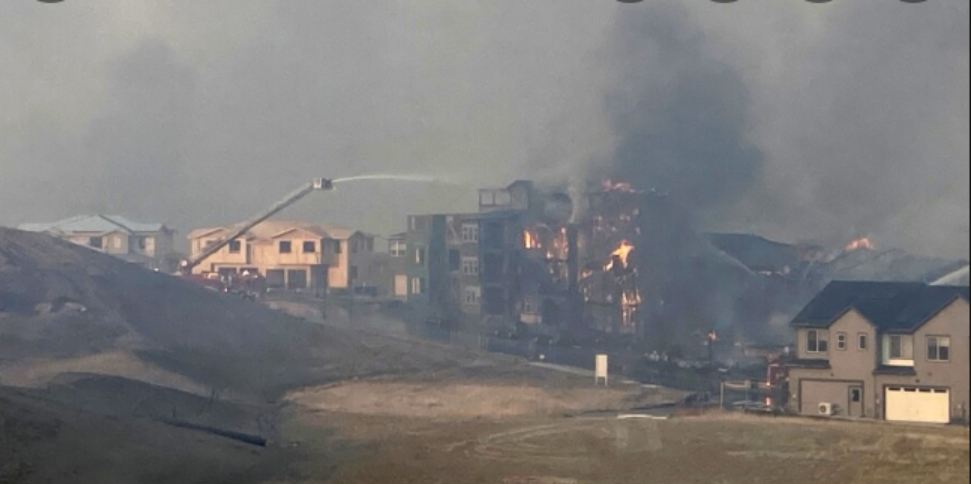
Active structure fires during a Colorado WUI wildfire event
Structure fires in WUI communities create a complex smoke plume containing combustion byproducts from homes, vehicles, and synthetic materials.

A WUI, or wildland-urban interface, fire occurs where developed neighborhoods meet undeveloped vegetation and open land.

Unlike traditional forest fires, WUI fires involve much more than burning trees. Entire communities can become part of the fuel load, including homes, garages, vehicles, electric vehicles, appliances, electronics, batteries, and household chemicals. This dramatically changes the composition of the smoke plume and the contaminants it carries.

You can learn more about Colorado WUI zones through the Colorado State Forest Service.
Why Smoke from WUI Fires Is Different

One of the biggest misconceptions about wildfire smoke is that it comes primarily from vegetation. In reality, modern WUI fires burn a wide range of synthetic and industrial materials.

As homes and structures burn, the smoke may contain:

  • Heavy metals such as lead, arsenic, chromium, and cadmium
  • VOCs released from plastics, fuels, and synthetic materials
  • SVOCs such as PAHs are created during incomplete combustion
  • Aldehydes, including formaldehyde and acrolein
  • Lithium from lithium-ion products
  • Ultrafine particles capable of traveling long distances and infiltrating buildings

This is why post-fire contamination differs significantly from normal environmental dust.

For homeowners concerned about post-fire exposure, professional smoke and soot testing can help identify the presence and type of contamination after wildfires.

How Wildfire Smoke Gets Inside Homes

Many homeowners assume smoke contamination only affects homes directly adjacent to a fire. Unfortunately, that is not the case.

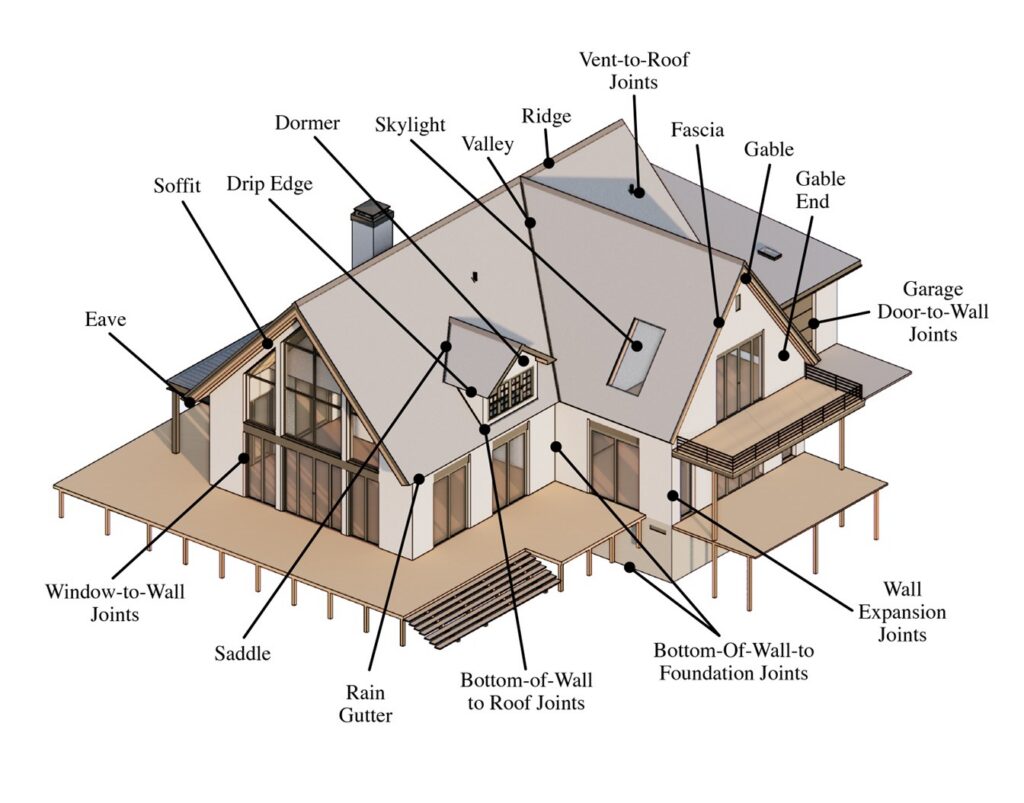
Even well-constructed homes are not airtight. Wildfire smoke can enter through small openings and construction joints throughout the structure.

“Diagram photo from WUI Handbook showing common pathways where wildfire smoke enters homes during WUI fires”

Common entry points include roof joints, eaves, garage connections, vents, windows, doors, skylights, and foundation interfaces. Once smoke enters a structure, contaminants can settle into dust, accumulate inside HVAC systems, and become embedded in porous materials such as furniture, carpets, and insulation.

This is one reason homes located miles away from an active fire can still experience measurable indoor contamination.

What Is WUI Fire Testing?

WUI fire testing is environmental sampling performed after a wildfire to evaluate whether smoke-related contamination has entered a structure.

Depending on the situation, testing may include dust sampling, indoor air quality assessments, metals analysis, VOC testing, SVOC testing, and aldehyde testing. The goal is not only to identify contamination, but also to better understand the likely source and extent of the exposure.

Because modern WUI fires involve burned structures and synthetic materials, the contamination profile often differs substantially from normal indoor environmental conditions.

Homeowners concerned about smoke exposure may also benefit from indoor air quality testing services after major wildfire events.

What Is Pre-Fire Baseline Testing?

One of the biggest issues emerging in wildfire-related insurance claims is the lack of pre-loss environmental data.

Pre-fire baseline testing documents the environmental conditions of a property before wildfire exposure. This can include evaluating indoor dust, metals, VOCs, SVOCs, aldehydes, and general indoor air quality conditions.

The purpose is simple: if a wildfire later impacts the property, there is documented baseline data available for comparison.

Without that documentation, homeowners may later find themselves trying to prove that contamination was caused by the fire and was not already present.

What We’re Seeing in California Insurance Claims

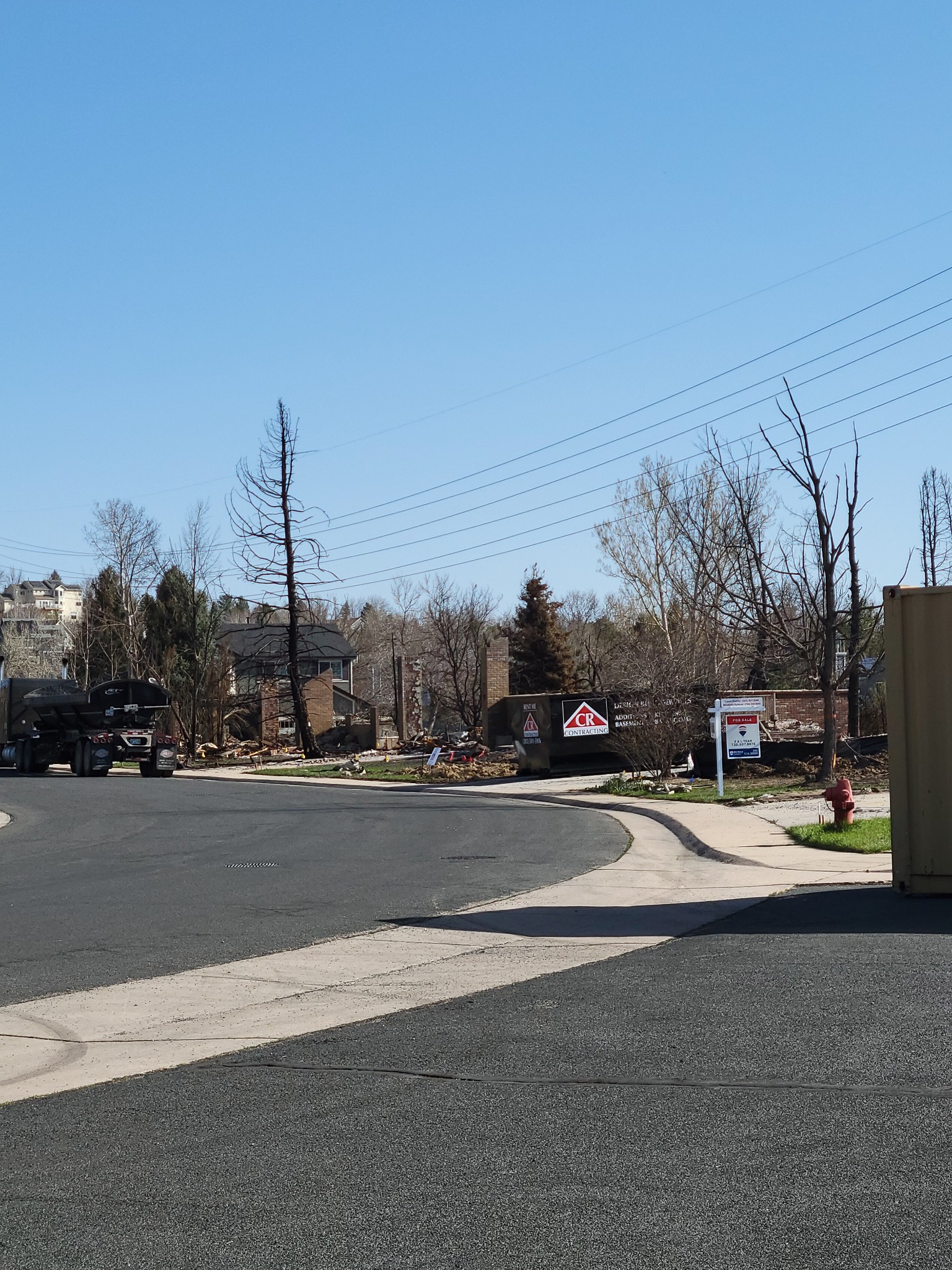
“Standing homes near destroyed structures following a Colorado wildfire”
Homes do not need to burn to experience measurable smoke contamination after a WUI fire.

Following major fires in California, including recent WUI events in areas like Eaton and Pacific Palisades, a concerning pattern has started to emerge.

Insurance-retained hygienists are increasingly arguing that contaminants identified inside homes were “pre-existing.” Metals may be dismissed as naturally occurring environmental dust, while VOCs, SVOCs, and aldehydes are described as common indoor compounds.

In some cases, even lithium contamination is being challenged despite the widespread burning of lithium-ion batteries, electric vehicles, electronics, and energy storage systems during modern fires.

Recent California wildfire disputes have highlighted the growing number of post-fire testing disputes between homeowners and insurers.

Even when laboratory findings show elevated combustion-related compounds, the absence of baseline testing can complicate the insurance process.
What Happens If Smoke Contamination Is Not Properly Addressed?

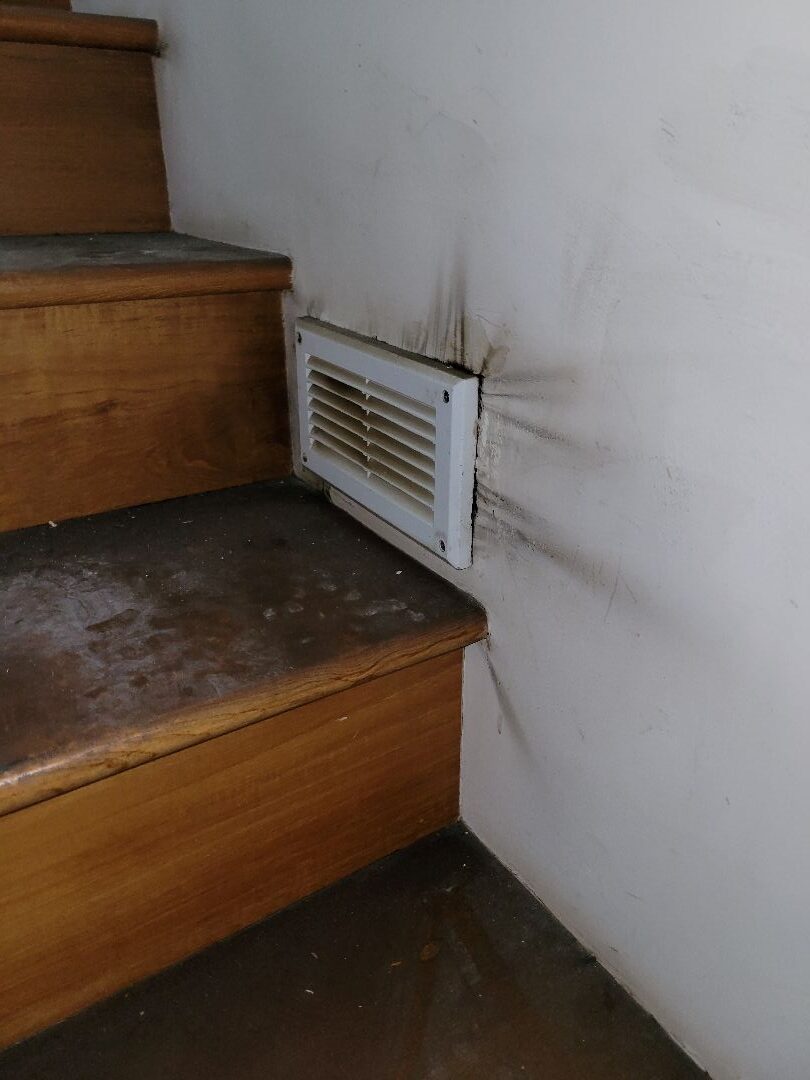
“Wildfire smoke contamination around a home HVAC supply vent”
Smoke contamination can accumulate around HVAC supply vents and continue circulating throughout a home long after a wildfire event.

Smoke contamination does not always disappear once the visible ash is cleaned up.

In some homes, contaminants can continue circulating through HVAC systems or remain embedded in dust and porous materials long after the fire event. Homeowners may continue experiencing smoke odors, irritation, or indoor air quality concerns even when the home appears visually normal.

The EPA provides additional information regarding wildfire smoke and indoor air quality.

The CDC also outlines health concerns associated with exposure to wildfire smoke.

Improperly addressed smoke contamination may also create complications involving insurance claims, remediation decisions, or future property transactions.
How Colorado Homeowners Can Prepare

As wildfire risks continue increasing throughout Colorado, proactive preparation is becoming more important.

Homeowners in WUI zones should consider:

  • Understanding how smoke enters homes
  • Improving filtration and HVAC maintenance
  • Reviewing insurance coverage
  • Documenting pre-loss conditions
  • Considering baseline environmental testing

For additional guidance, homeowners can also review these recommendations on how to protect indoor air quality after wildfire smoke exposure.

Final Thoughts

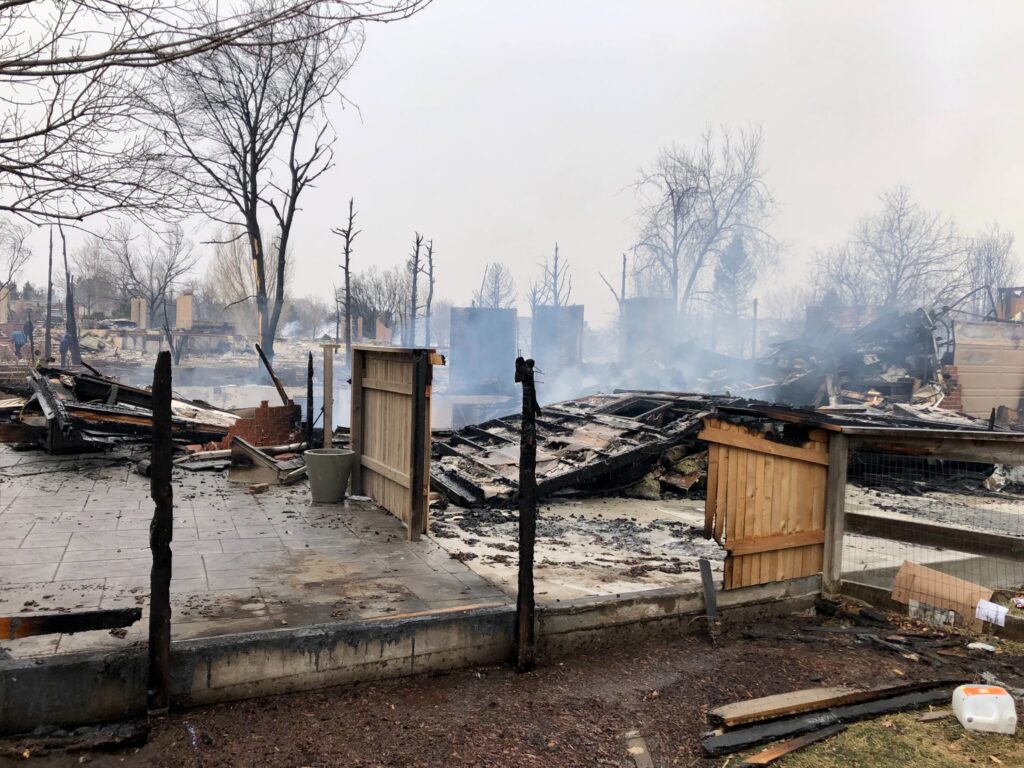
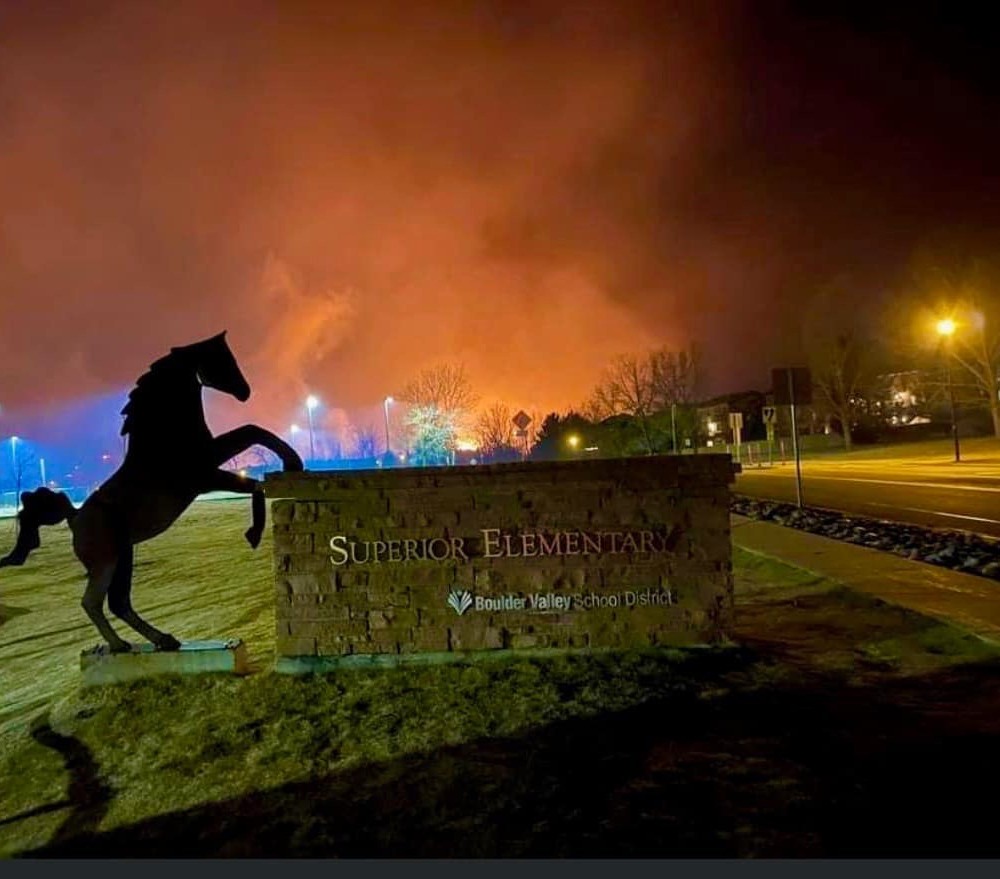
“Colorado neighborhood illuminated by wildfire smoke during the Marshall Fire”
Wildfire smoke impacts entire communities, including homes that may remain standing after the fire passes.

Wildfires are no longer isolated events affecting only Colorado. Across the United States, Canada, and other parts of the world, communities are increasingly facing wildfire smoke impacts as more development occurs within wildland-urban interface (WUI) areas.

What many homeowners are now facing in California may increasingly become an issue in Colorado as well: smoke contamination disputes, indoor air quality concerns, and challenges proving contamination after a fire event.

Understanding how wildfire smoke behaves, how contaminants enter homes, and how baseline testing can help document environmental conditions may become an important part of future wildfire preparedness and recovery.

Concerned About Future Wildfire Smoke Contamination?

For homeowners living in Colorado WUI zones, pre-fire baseline testing can provide valuable environmental documentation before wildfire exposure occurs. This testing may help establish whether smoke-related contamination was present before or after a fire event and can become important when navigating future insurance claims.

To learn more about wildfire smoke baseline testing, contact MARS Environmental.