Meth contamination in homes can stay hazardous for years. Indoor air quality expert Jeanine Humphrey discusses the disclosure requirements of sellers, what’s involved in the remediation process, and why a property owner shouldn’t DIY methamphetamine cleanup.
If you live in Colorado, you might recall news stories from 2023 about Denver and Boulder public libraries closing their doors due to toxic drug residue in the bathrooms—specifically, methamphetamine residue.
This reporting brought attention to the rise in meth usage in the state. Meth is cheaper now than it ever was, and deadlier too. This trend isn’t just impacting people responsible for managing public buildings like libraries. It’s also a huge thorn in the side of landlords whose tenants engage in illicit drug use, as well as unsuspecting buyers who accidentally purchase a former meth lab.
If you’re looking at a property with an eerily low price, it’s best not to rely on visual inspection alone. While the signs of meth production—stains, a strange ammonia smell, unusual trash components like torn-up batteries, and possible “dead spots” in the yard—may be obvious, it’s possible that the seller will have painted over the problem.
If you’re a seller and you know that your Colorado property has been the site of meth production or heavy usage, it may be tempting to put in new flooring and apply several coats of heavy-duty paint. However, this not only endangers the health of future occupants; it also puts you at risk of legal consequences.
Why methamphetamine-contaminated properties remain hazardous long-term
First, let’s clarify that we’re talking about two different things: contamination from meth production, and contamination from smoking the drug itself. Both of these, to varying degrees, can make a structure unhealthy to live in.
Meth production involves many noxious chemicals, including:
- flammable solvents
- corrosive acids
- reactive metals like lithium
- powerful central nervous system depressants like ethyl ether
Some byproducts can be explosive, turning a site into a “ticking time bomb.”
People cooking meth usually don’t bother to dispose of the chemicals safely. They’ll dump battery acid and various solvents somewhere in the yard, where plants will then wither and die.
What about properties where meth was smoked heavily but not produced?
Signs that a property has been used to manufacture methamphetamine can be obvious, but not always. Here are a few characteristics that should raise your suspicions:
When a property’s former occupants were meth smokers rather than meth cookers, you’re only dealing with one major chemical contaminant: methamphetamine itself.
This may not present the same horror of explosive chemicals and dead vegetation, but it’s still quite bad for you.
Methamphetamine residue is a sticky substance that doesn’t degrade over time. It sinks into porous building materials, where it off-gases and continues to poison people living inside.
Unsuspecting residents can experience headaches, respiratory problems, skin irritation, and sleep problems, among other things. Children can also exhibit ADHD-like symptoms and behavioral issues.
Are sellers in Colorado and Nebraska legally required to disclose past meth contamination?
In Colorado, the law is highly protective of anyone buying a new property that could be a health hazard. The state expressly grants buyers the right to test for meth residue and cooking byproducts using a certified testing service, and a positive test is reason enough for a buyer to walk away from the purchase. Colorado also has very specific requirements for cleanup, reporting, and clearance.
Sellers who know that their property has been used as a meth lab must disclose this in writing, unless the property has undergone a thorough cleaning and achieved a clearance status. The property will be listed on a public database for five years after clearance has been achieved.
Failure to disclose known contamination from the drug or its production can ultimately make the seller responsible for paying the costs of remediation, any medical costs stemming from the new occupants’ exposure to harmful chemicals, and the new occupants’ attorney fees.
Nebraska doesn’t have anything akin to Colorado’s public listing, but it does regulate the cleanup of former meth labs. Property owners who discover a drug lab on their premises must notify law enforcement, which will then go in and gather evidence on the chemicals found on-site.
Why methamphetamine remediation isn’t something property owners can do themselves
When a home is meth-contaminated, the hazardous residue has often spread throughout its HVAC system, settling deep into the pores of drywall, plasterboard, insulation, and other materials.
Any repairs or cleanup not done by qualified environmental consultants will be merely cosmetic. Painting and remodeling might hide the residue, but this won’t make it go away.
M.A.R.S Environmental has encountered property owners who went through the trouble of repainting the whole interior, installing new flooring, and then placing the house on the market. Methamphetamine testing ordered by a prospective buyer then showed the property to be still contaminated. All of the cosmetic repairs had to be undone, and the HVAC system, appliances, and wall materials also needed to be removed during remediation.
Case studies like this show why cleanup isn’t a do-it-yourself activity. Ultimately, you may find yourself on the hook for the costs of undoing your original work as well as the remediation that needed to take place all along.
What happens when you remediate a meth-contaminated property
Nebraska and Colorado have different clearance thresholds for cleanup. In Colorado, clearance testing must show levels at or below 0.5 micrograms per 100 square centimeters. For meth clearance in Nebraska, levels must be 0.1 μg/100cm² or less.
Here’s a quick step-by-step of the testing and remediation process:
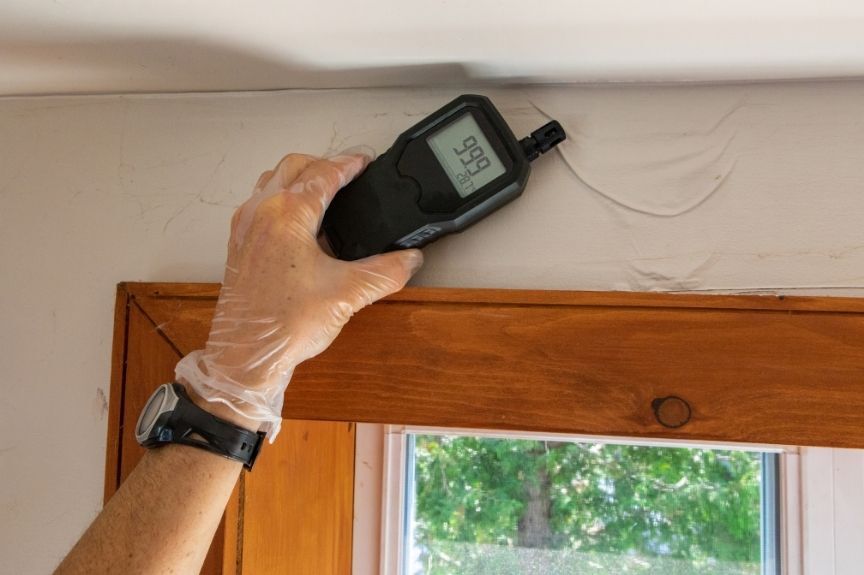
- Complete a preliminary assessment (PA). This involves surface wipe testing to determine the extent of meth residue in the home.
- Get proposals from qualified environmental professionals. Also known as a “contractor walk,” this is where certified contractors will meet you at your property, evaluate the damage, and submit a proposal packet for you to accept or reject.
- Let the contractors do a thorough cleanup. The entire process can take up to three weeks: a few days for assessments, days to weeks of active decontamination, and 2-4 days to let the surfaces dry.
The remediation process involves spraying a chemical onto all surfaces, including walls and ceilings, and wetting them down. Bathroom vent fans will be removed. In most cases, the entire HVAC system and ducting must be taken out, too.
Since the residue can collect deep inside porous materials, anything that can’t be wiped down gets discarded. If residue on walls is above a certain level, the entire wall (and associated cabinetry) will have to go.
Professional handlers are responsible for disposing of contaminated materials safely. This often involves double-bagging soft materials, cutting up larger structures to render them unusable, and hauling everything to a licensed landfill area.
What happens when a meth-contaminated home also has asbestos
Homeowners who are aware of all the potentially dangerous materials that could be present in their home (lead paint, asbestos, etc.) may wonder what happens when meth cleanup collides with other concerns. They’re right to be thinking about this.
If methamphetamine has gotten into asbestos-containing structures, the asbestos must be abated first. Disturbing the asbestos without proper safety measures releases harmful, lung-scarring fibers into the air, so its removal also requires qualified contractors. (You can see how these cleanups can quickly compound.)
Popcorn ceilings (those bumpy ceilings that were all the rage from the 1950s to the 80s) are an example of this double-whammy. They can’t be cleaned with the chemical spray, so they must be scraped down. Unfortunately, they also contain asbestos.
M.A.R.S Environmental can help homeowners navigate these situations. If meth testing comes back hot, we recommend asbestos testing before remediation begins. Some companies can clean up both at once, but if they can’t, then meth remediation must come first.
As with drug-contaminated materials, asbestos-containing materials have to be disposed of in a specific way. It must be appropriately labeled and transported to a solid waste disposal facility by licensed handlers.
What are real estate professionals’ responsibilities when a property is being remediated?
Depending on the conditions that the property is in, testing and remediation may involve several assessment stages. Throughout the process, brokers should:
- document their observations clearly,
- encourage due diligence, and
- refer clients to service providers who have the right credentials.
You may be tempted to determine levels of contamination through observation alone, but this is insufficient. Testing is the only way to know how widespread the drug residue is.
If a property ends up placarded or restricted, you can’t legally enter it. Only licensed consultants and contractors are allowed to step inside until remediation is completed and clearance testing shows that the structure meets applicable standards.
Making your home livable—and marketable—again
Verifying that a property is safe after remediation will likely take multiple clearances. Initially, some rooms may pass, while others may need additional cleaning or removal. M.A.R.S. Environmental sees most properties undergo an average of three clearances.
The process may be expensive and time-consuming, but once it’s finished, you’ll be protected against claims of nondisclosure. Property owners who have achieved a clearance status in Colorado no longer have to disclose that there was any drug use or production on the premises.
Even more importantly, a remediated house will be truly safe for people to live in long-term. Rather than taking a loss when you sell the property as-is, you can market it at a competitive price that reflects the value of the structure and its location.
If your Colorado or Nebraska property has tested positive for methamphetamine residue, M.A.R.S. Environmental can help. Contact us today to learn more about the process and what your options are.