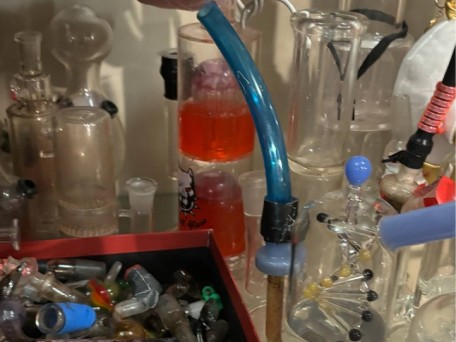
Methamphetamine contamination in homes is a serious issue. Indoor air quality expert Jeanine Humphrey explains what concerned buyers, sellers, and property managers should look for if they suspect a property has been the site of drug production or heavy meth usage.
We wish we could say that meth contamination in homes was rare. It’s not.
M.A.R.S Environmental finds it in about 2-3 inspections per week, usually in connection with real estate transactions, rental property management duties, or police raids.
Even worse: The residue doesn’t break down quickly. It’s a stable chemical that can stick around for years on walls, counters, and floors. It off-gases, and the vapors remain toxic.
What this means for buyers is that testing for residential meth contamination is very important. It’s also recommended that owners of rental properties test between renters, since illicit drug use can slip under the radar.
And for sellers … well, let’s just say that this issue is gaining attention, and people don’t want to live in a house that might cause health problems. It’s tempting to ignore the problem and pass it off to the next owner, but this could land you in legal trouble.
Whether you’re buying, selling, or renting, it’s best to do your due diligence and test the property.
How Colorado and Nebraska deal with meth-impacted real estate
Methamphetamine exposure is very bad for your health. It absorbs into skin and lung tissue, causing eczema-like irritation, breathing difficulties, and migraines. Over the long term, it can injure the nervous system, liver, and kidneys. Young children may suffer from behavioral problems, sleep disruption, and stunted growth.
It’s no surprise, then, that many state governments now take meth contamination very seriously. Sellers or real estate brokers who are found to have withheld information about possible contamination may be on the hook for the cost of cleanup, medical expenses, legal fees, and other damages.
Meth remediation in Colorado falls under the purview of the Colorado Department of Public Health and Environment (CDPHE). If a state-compliant screening pops positive, sellers must notify the CDPHE. No one can enter the property until it’s cleaned up, and the house will be listed on a public database for five years post-cleanup.
Nebraska is a bit laxer; the state only regulates methamphetamine-affected properties when there’s a lab present. The sheriff’s department simply gathers evidence, and then it’s up to the homeowner to decide how to deal with it.
One thing for sellers to keep in mind about meth contamination in Nebraska: The rules can change, and if anything, they’ll probably get stricter. Due diligence testing is the best way to ensure peace of mind and avoid post-sale lawsuits.
Reasons to suspect a Colorado or Nebraska property might have been a meth lab
Signs that a property has been used to manufacture methamphetamine can be obvious, but not always. Here are a few characteristics that should raise your suspicions:
- Powerful odors that call to mind cat urine, ammonia, acetone, or vinegar. This is due to chemicals like anhydrous ammonia that are involved in the cooking process.
- Yellowish-brown stains on the walls and other surfaces. Iodine is one of the components used in meth production, and it can stain things quite easily.
- White, powdery residue sitting on countertops, windowsills, and other areas. The cooking process releases volatile organic compounds (VOCs) into the air, and these settle on hard surfaces as a white residue.
- Excessive amounts of trash piled up. It won’t be your everyday trash, either. You might spot a head-scratching number of cold medicine tablet wrappers, torn-apart lithium batteries, and stained coffee filters.
- “Dead spots” in the yard where plants aren’t growing very well (if at all). Toxic waste may have been dumped and/or burned in the soil outside, creating an inhospitable environment for vegetation.
- Your eyes itching and your airways feeling irritated while you’re inside. This happens only in extreme cases. Go outside immediately and get medical attention if you have this reaction.
If there’s an opportunity, go have a quick chat with the neighbors. They might have a lot to say about the previous occupants’ strangely secretive behavior, tendency to cover up the windows, and their numerous visitors at odd hours.
Even heavy drug use can contaminate a property long-term
Unfortunately for buyers, a property doesn’t need to have been a meth house to be contaminated. Simply smoking the substance can build up residues that surpass Colorado’s due diligence screening threshold of 0.5 micrograms per 100 square centimeters. In fact, multiple smoke session within a home have been found to generate levels between 1.54 and 5.10 μg/100 cm2.
And in these cases, there might not be any visual or olfactory indication at all. (It’s the cooking that creates the strong smells.)
When looking at an older Colorado home or one with a suspiciously low price, ask to see the clearance report, and search for it on the CDPHE website. You can also ask with the following questions:
- Was it ever a rental property?
- Has there been any known drug use on the premises?
- Has there ever been police activity here?
Nebraska doesn’t have anything akin to the CDPHE database, but you can certainly pose the above questions to the real estate agent.
How does the residue from smoking meth get absorbed into a home’s structure?
Like cigarette smoke, methamphetamine residue and associated impurities attach to nearly all surfaces, including walls, ceilings, and furnishings. The drug gets aerosolized when heated, and the vapor will settle as a crystallized salt on hard surfaces or absorb into porous materials.
Even if it’s only being smoked in one area, the vapor can go through return vents back to the HVAC system itself, causing further propagation throughout a home.
Contamination levels can be enough to flag screenings as positive even if a property looks clean. Trying to wipe surfaces down won’t fully remove it, particularly if levels are high.
Even just-built homes can have meth residue
You’d think that the one way to absolutely, completely, 100% ensure ZERO meth contamination would be to buy a brand-new home. Unfortunately, even this falls short of a full guarantee.
Why is this? Well, it so happens that construction has one of the highest rates of addiction of any industry in the United States. So, if your new build tests positive for meth residue, it could have been due to a contractor smoking during a break.
Why you should test for methamphetamine before painting a property
A lot of real estate transactions involve going in and painting a home to get it spiffed up and ready for sale.
There’s only one way to test for meth residue, which is surface wipe sampling using an alcohol-based solvent. This dissolves paint.
Why can’t you just test the air? Since the residue continues to off-gas and migrate to other parts of a home, it doesn’t make sense to test only for airborne methamphetamine. Surface wipe testing is the industry standard because you need to know how much of the toxic substance is clinging to the walls, floors, furniture, and ventilation systems.
How to test for meth contamination in Colorado real estate
Buyers, sellers, and property managers who are curious about the methamphetamine levels in a Colorado property or rental unit can start with a non-state-complaint, due diligence screening (also known as a “pre-check”) for $500.
This test involves taking a minimum two composite samples for properties less than 2,500 sq ft., and the trigger level of 0.2 μg/100 cm2 is much lower than regulated levels. (An additional sample is needed for larger properties.) If this test is positive, or if you’ve received credible information regarding possible meth contamination, then you must do a state-compliant test.
There are three state-compliant testing stages:
- Screening (Starting at $850 + lab fees). This requires one aliquot per room (four aliquots will equal one sample) plus a blank for every sample past the 10th one. If you get a positive sample, then you’ll need to move on to a preliminary assessment (PA).
- Preliminary Assessment (starting at $1,250–$1,350 + the price of samples). You’ll need one sample per room, including crawlspaces, attics, garages, and outbuildings. Additionally, four discrete samples must be added for the HVAC and major appliances like your stove, microwave, fridge, freezer, and dryer.
- Clearance Testing (starting at $1,250–$1,350 + the price of samples). This is how you make sure remediation actually worked. It’s similar to the PA, but you might need to test additional areas if the decontamination only tested the HVAC and rooms that considered “hot.” Be sure to include discrete samples for major appliances if these are still in place.
We stated above that the threshold for a property to be considered “contaminated” in Colorado is 0.5 μg/100 cm2, but there’s a bit more nuance to this during state-compliant testing. For example, non-livable spaces like attics, crawl spaces, and the structural materials behind drywall sit at 4.0 for a clearance.
If meth levels surpass these thresholds, you’ll need to engage the services of a remediation company (it can’t be the same one that did the testing).
Why sellers shouldn’t simply paper over the issue
Decontamination costs can quickly spiral out of control, reaching into the tens of thousands of dollars. In the case of a former lab, it’s possible that the cabinetry, flooring, drywall, and insulation may all have to be taken out.
Many sellers won’t open this can of worms. They’ll simply do a repaint, replace the carpeting, and call it a day. (Again, this is why buyers must do their own due diligence testing.)
This being said, if you know your property (or one you’re helping to sell) is contaminated, the right thing to do is to take care of it.
Someone who buys your property can sue you—and force you to pay cleanup expenses—up to three years post-closing if they can prove that you withheld information about the problem. You might also have to help pay for any medical expenses that they can link back to methamphetamine exposure.
Testing to secure your future
For buyers, meth contamination testing is a critical step in making sure that your future home won’t jeopardize your health. The nature of real estate transactions doesn’t always favor full transparency, so it’s up to you to demand the things you need to make an informed decision.
For property managers, testing between rental occupants is a good practice. Even if you’re doing frequent inspections, their use of methamphetamine might escape your notice. The longer the drug residue builds up, the trickier the cleanup will be.
Finally, for sellers and real estate brokers, testing and remediation is a great way to avoid being sued for nondisclosure. Even more importantly, you’ll know that you’re giving them a home that’s safe for people long-term, including for young children.
If you suspect that your Colorado or Nebraska property has been contaminated with methamphetamine, contact M.A.R.S. Environmental to learn more about your options for testing and remediation.